


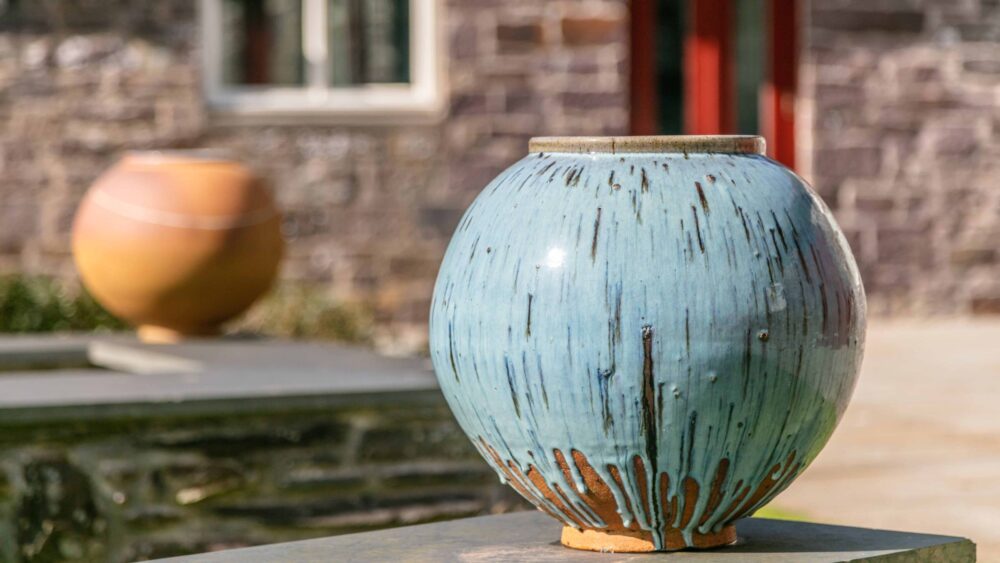
About The Artist
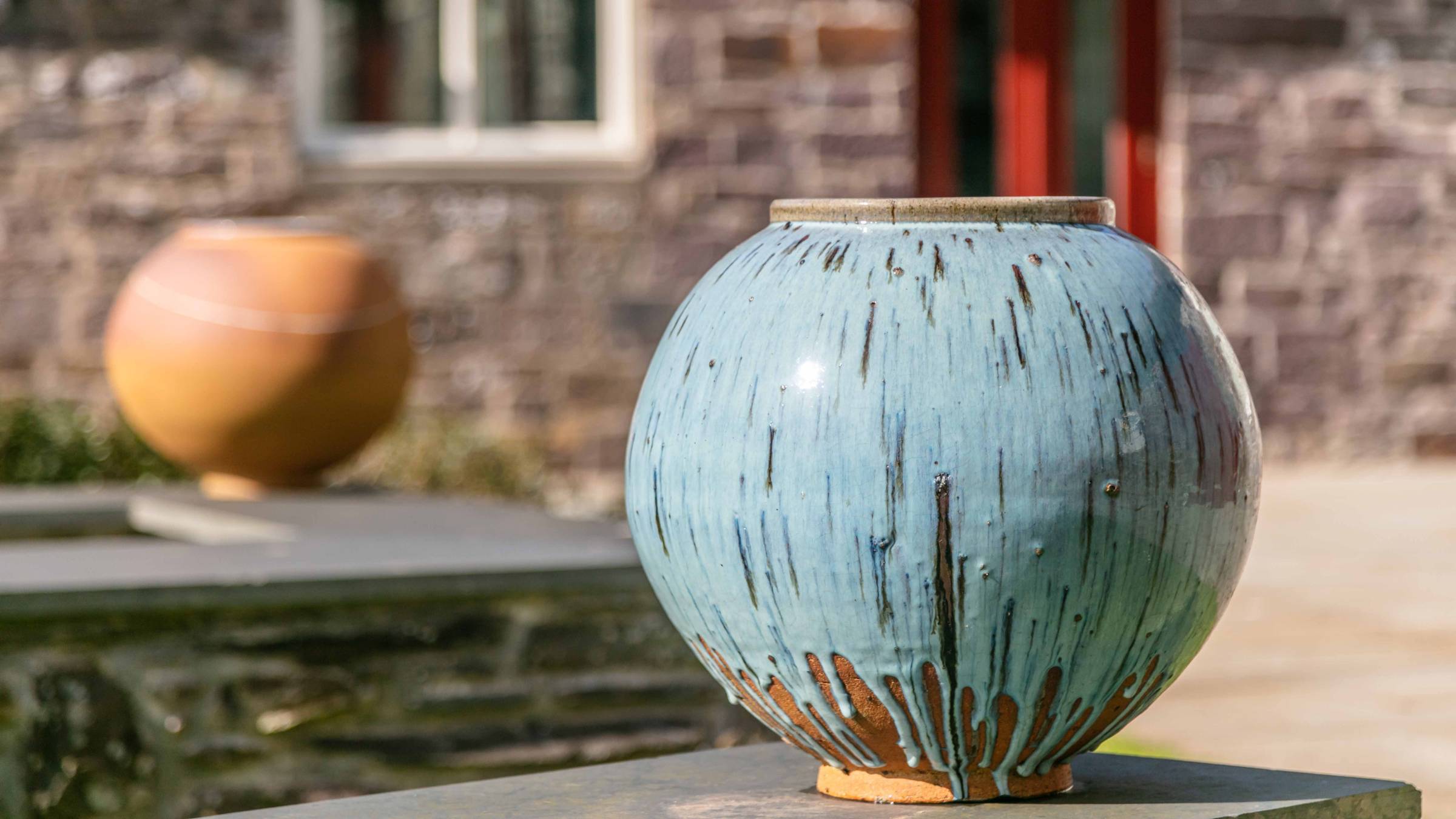
Adam Buick is a ceramicist living and working in West Wales. Buick’s work with the ‘Moon Jar’ form, itself inspired by Korean dal-hang-a-ri vessels, has always been flavoured with the landscape of Pembrokeshire through the use of local materials from the coast. Buick’s ongoing research into local materials; black sand, stones and seaweed from the Pembrokeshire coast and clay dug from local moorlands, is used to create a narrative that conveys a unique sense of place. The unpredictable nature of each jar comes from the inclusions and their metamorphosis during firing. This individuality and tension between material and process speaks to the human condition and how the landscape shapes us as individuals.
Landscapes have inspired artists for generations, but for Buick a landscape has to be felt and a depiction is never enough. To this end, he is inspired by archaeological theories that the Menhirs of prehistory are a veneration of the landscapes that surrounds them. With his site-specific work, he too venerates the landscape. By placing a jar at a particular location within the landscape, Buick hopes to inspire viewers to look beyond the object, to its surroundings.
Buick’s work is also about change, natural cycles and the transience of human endeavour. Buick’s ‘Earth to Earth’ project, consisting of a raw, unfired Jar at the top of Carn Treliwyd in Pembrokeshire, seeks to illustrate one cycle as a metaphor for all. Made from the earth; the wind and rain will return it back to the earth. Clay in turn is created from the weathering of igneous rocks upon which this unfired jar stands.
Buick’s work has been featured in the Saatchi Gallery, Frieze, and Joanna Bird, all in London, as well as the Cheongju Bienniale in South Korea, the Yale Center for British Art, in Connecticut, and others. His work is held in both national and international private collections. Buick’s skill with local materials meant this commission presented the opportunity to create a more literal interpretation of the coastal margins of Pembrokeshire than his usual forms. Buick developed tall, grand pieces using thick clay cut away with a wire to create a jagged, angular aura reminiscent of Pembrokeshire’s coastal rock formations. The name ‘monolith’ comes from archaeology and geology and is descriptive of the embedded history and transformation of the rocks they represent.
“Landscapes have inspired artists for generations but for me a landscape has to be felt. To depict it is always going to fall short. I was inspired by archaeological theories that the Menhirs of prehistory are a veneration of the landscapes that surrounds them. With my site-specific work I too am venerating the landscape. By placing a Jar at a particular location within the landscape I hope that it will make us look beyond the object to its surroundings.
My work is also about change, about natural cycles and the transience of human endeavor. Part of my ‘Earth to Earth’ project is to illustrate one cycle as a metaphor for all. I placed a raw, unfired Jar at the top of Carn Treliwyd in Pembrokeshire. Made from the earth; the wind and rain will return it back to the earth. Clay in turn is created from the weathering of igneous rocks upon which this unfired Jar stands.
Paths are a motif I use to represent my actual and metaphorical journeys through a place. To understand a landscape is to move through it, to give it context. Paths are like common routes of experience, guiding us through the landscape. They are connections through time, to others and to the land. Ultimately my work is about being present within a landscape.”
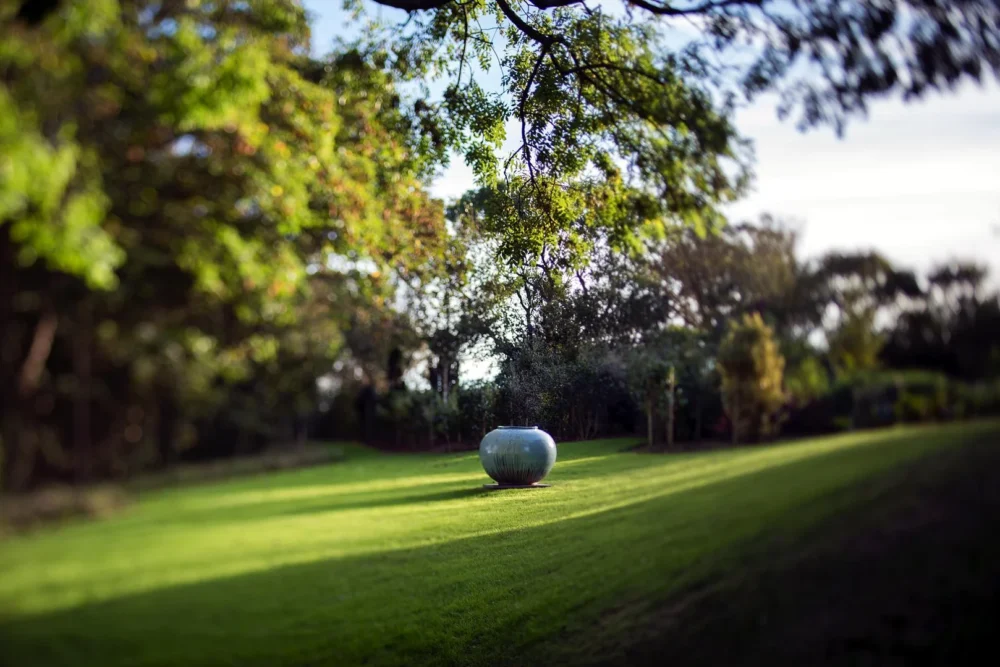
Moon Jar at Penrhiw Hotel Gardens
Adam Buick
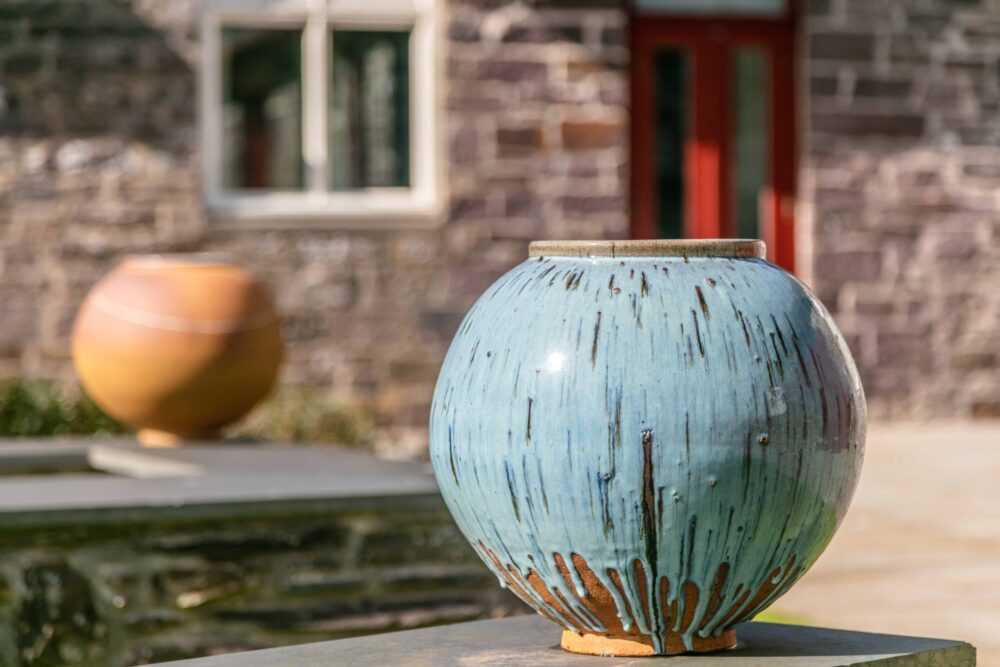
Moon Jars
Adam Buick
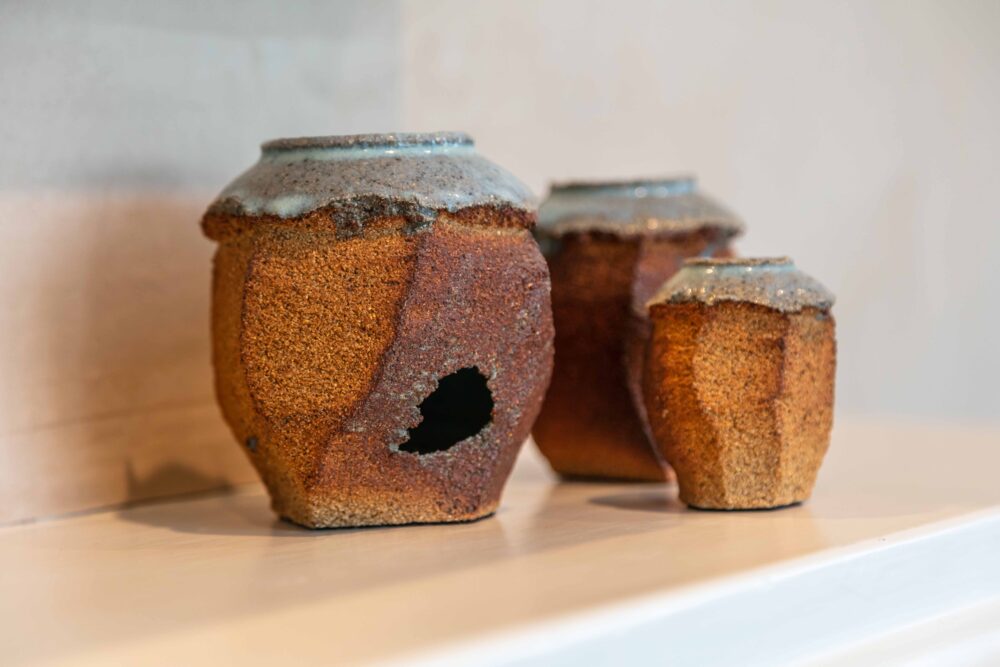
Cliff Jars
Adam Buick
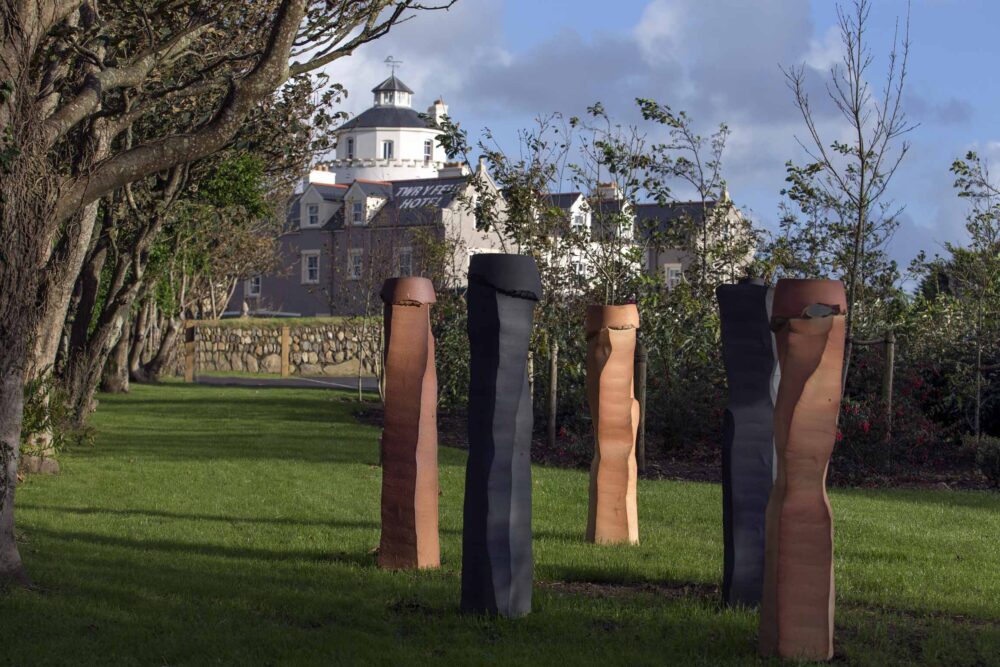
Monoliths
Adam Buick
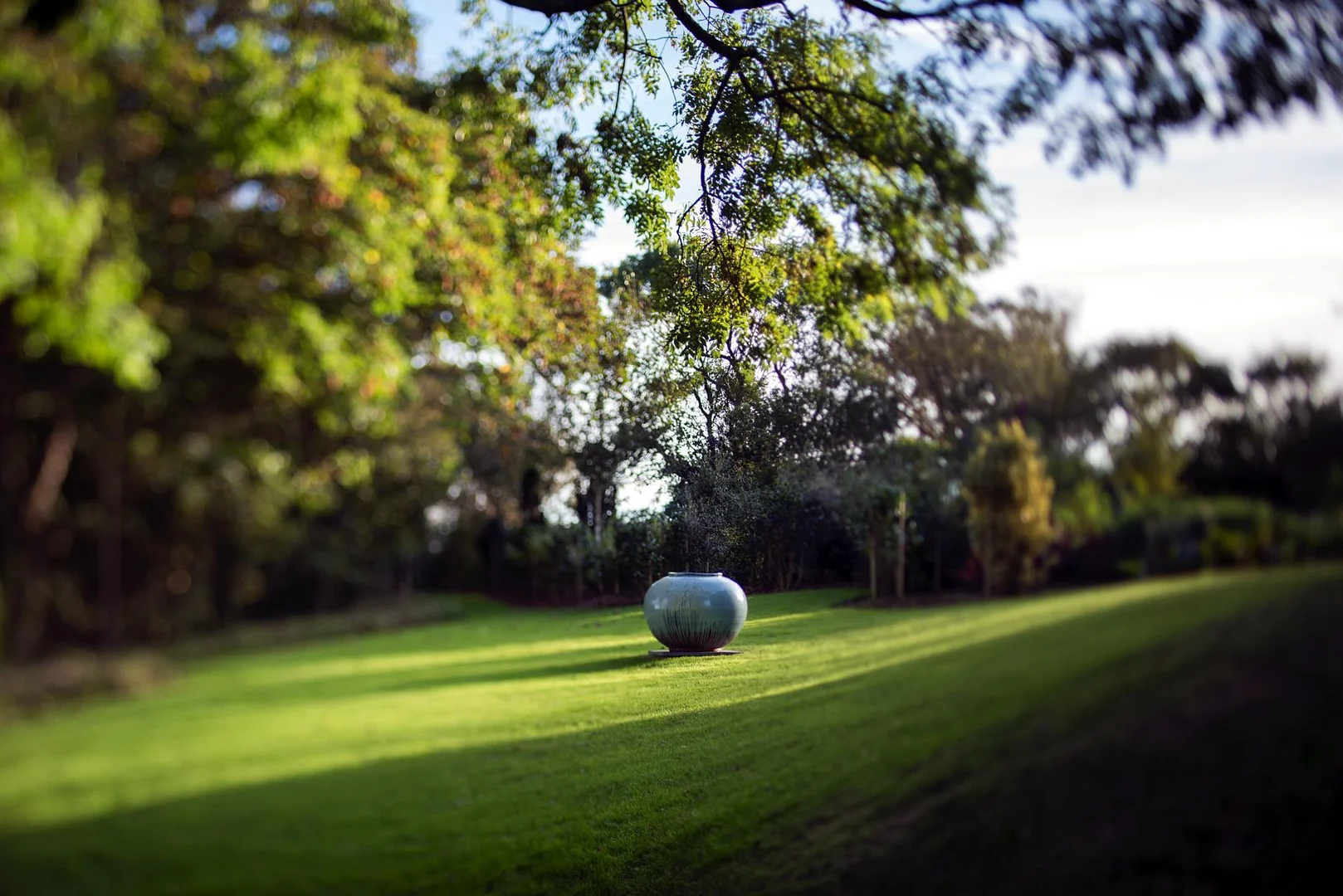
Moon Jar at Penrhiw Hotel Gardens by Adam Buick
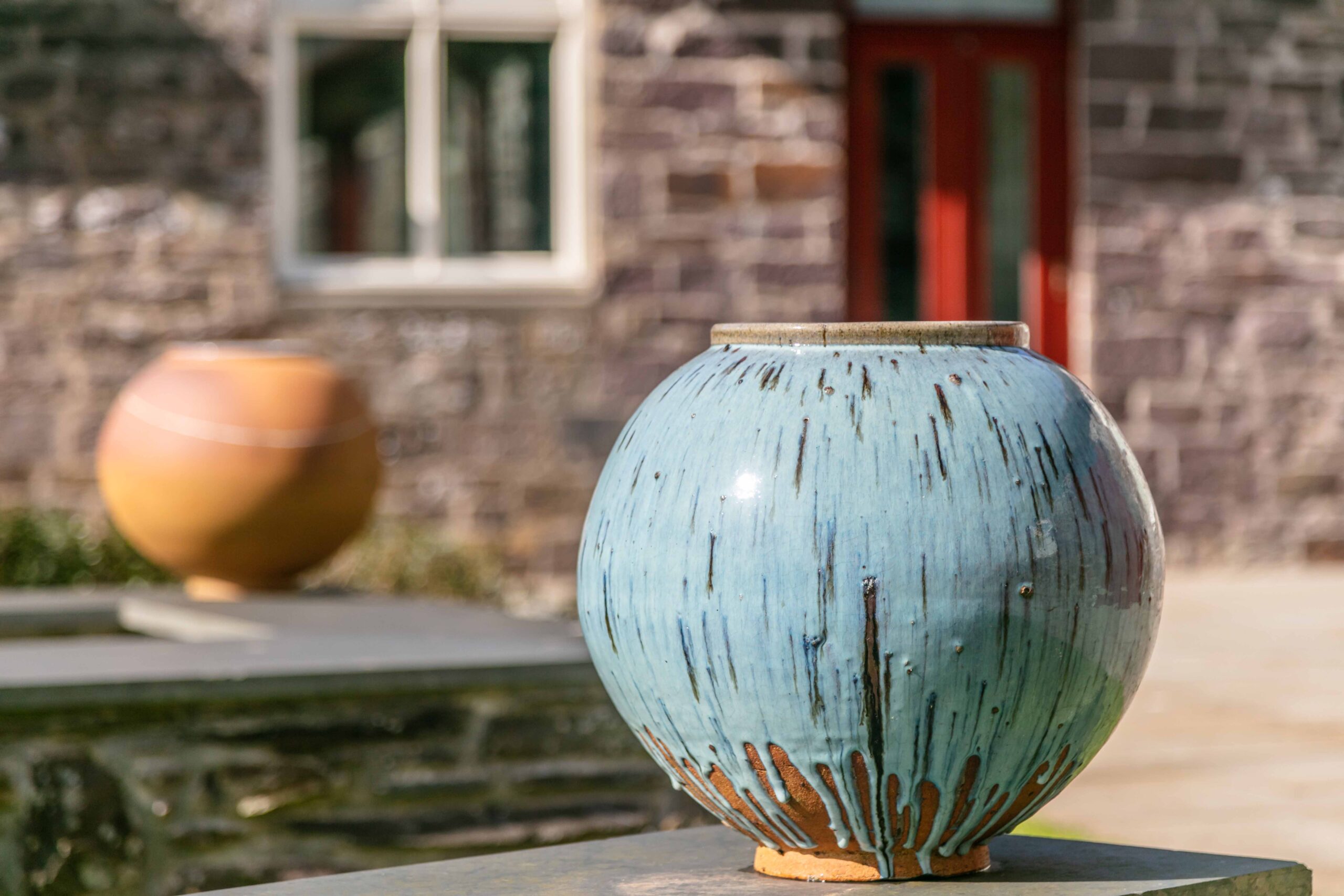
Moon Jars by Adam Buick
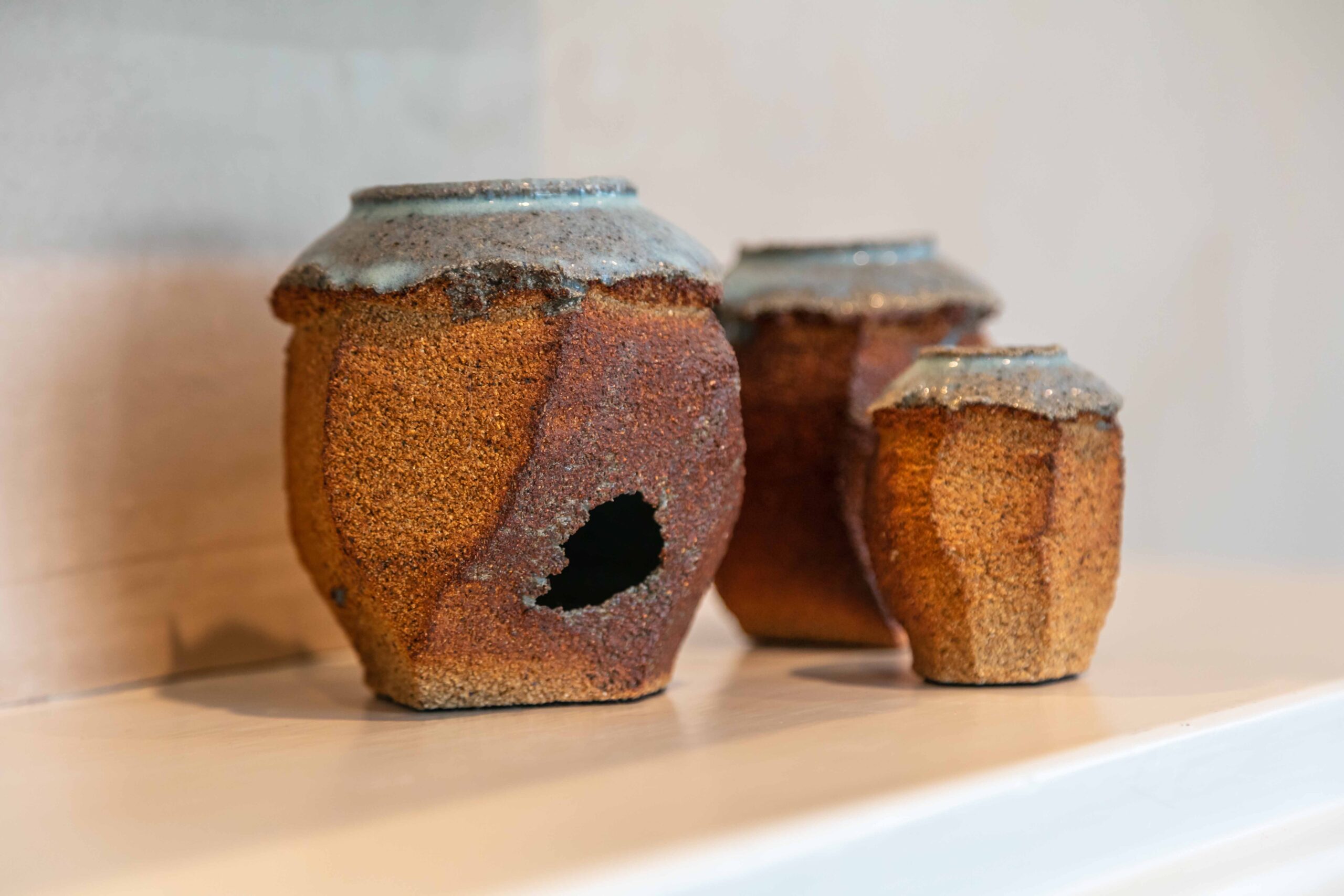
Cliff Jars by Adam Buick
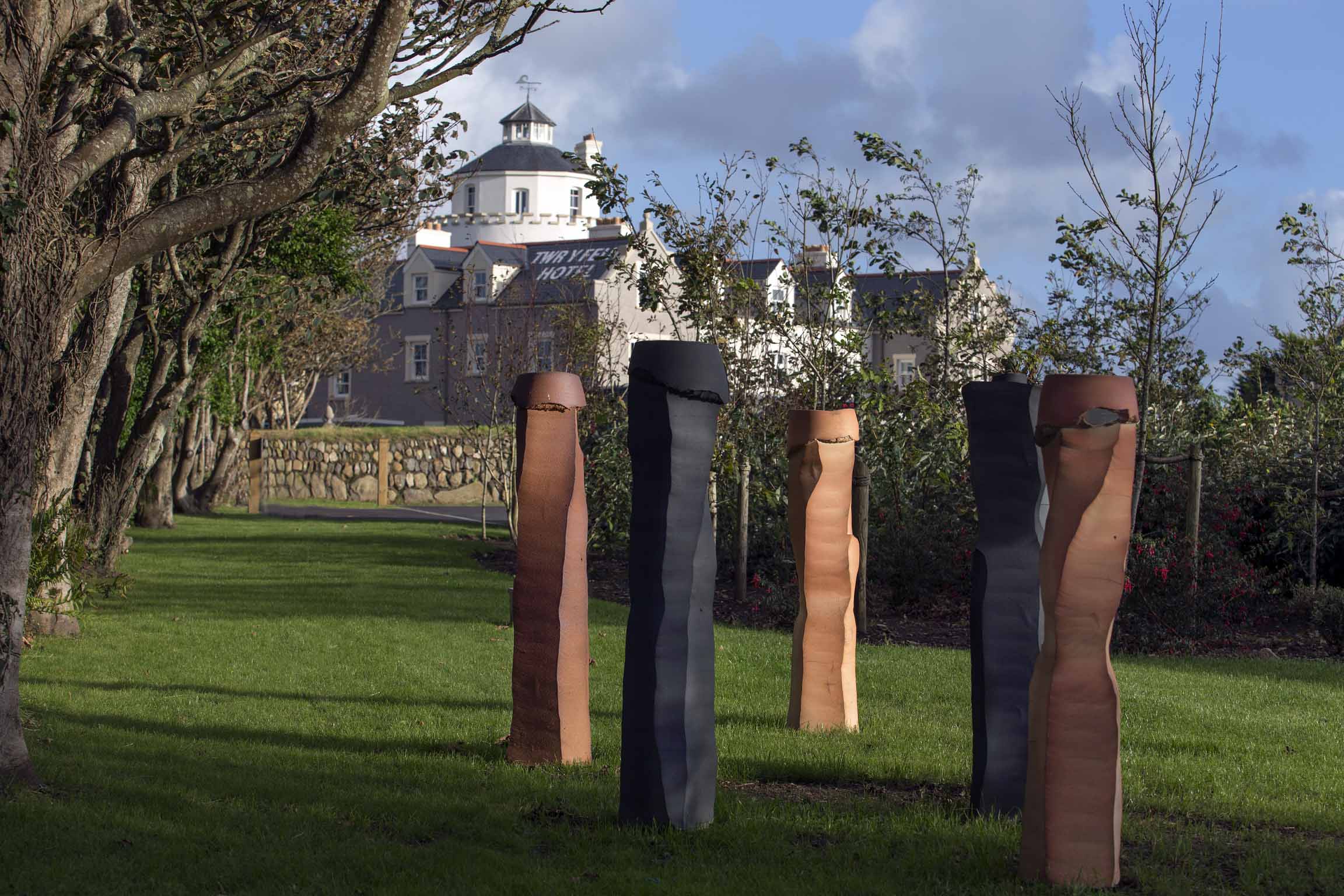
Monoliths by Adam Buick
Explore the collection
Discover similar artists
All artists • Painters
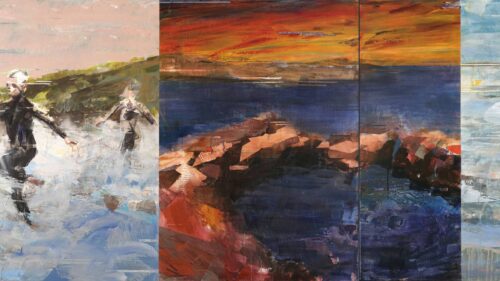
Michael Azgour
Michael Azgour blends pattern, distortion, and narrative to capture St Davids’ coastal landscapes and human presence.
All artists • Sculptors
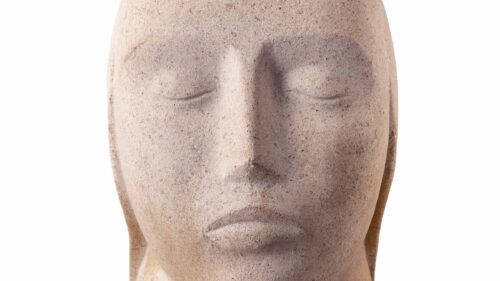
Cathy Wood
Cathy Wood, Bath Academy of Art graduate, sculpts stone inspired by nature and the human figure.
All artists • Painters
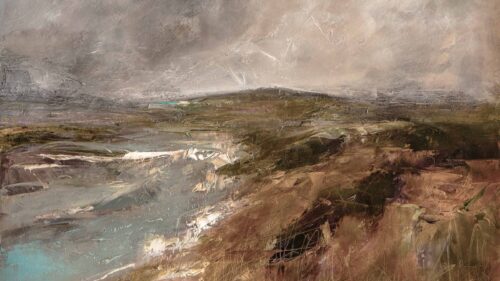
Zoe Taylor
Zoe Taylor creates award-winning, contemplative landscapes blending field sketches, imagination, and layered, neutral-toned compositions.
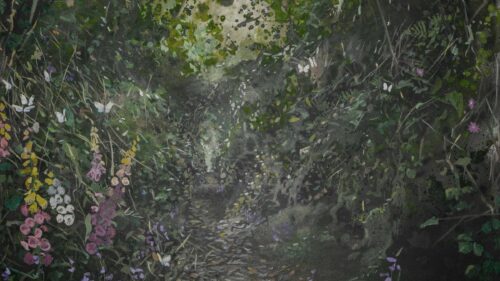
All artists • Painters
Xenz
Xenz, a UK street artist, blends graffiti and impressionism, creating nature-inspired murals worldwide.