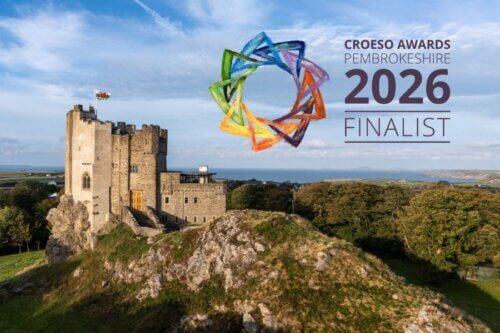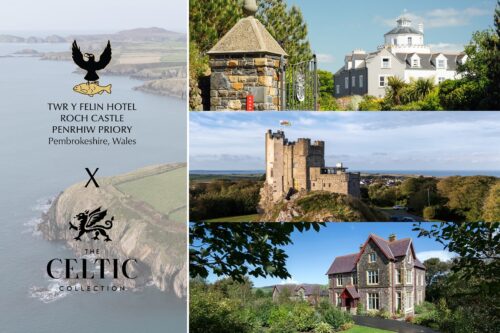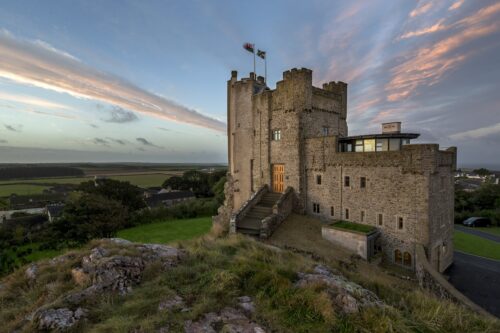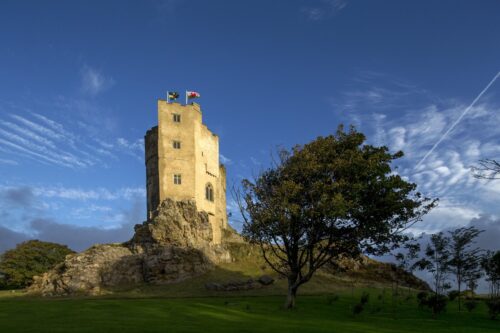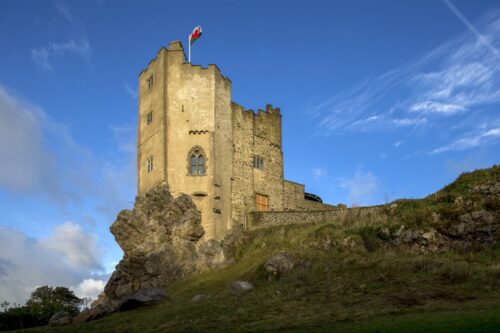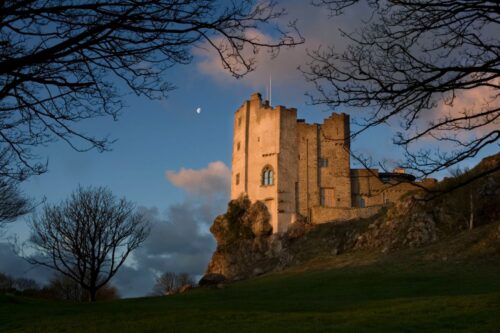



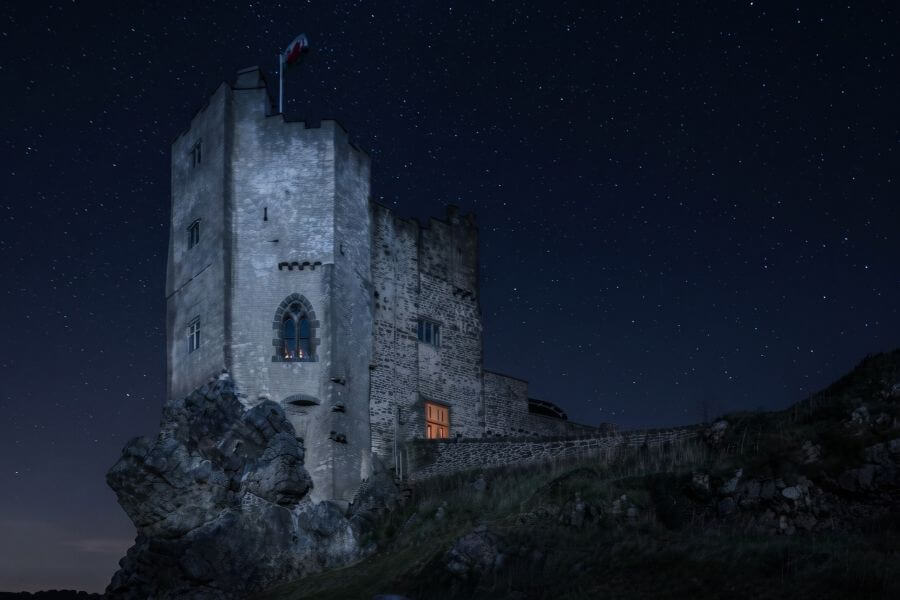
For centuries, people have looked to the night sky for stories, signs and explanations for the world around them. Constellations became characters in ancient myths, while meteor showers were sometimes seen as omens or messages from the heavens. Here in Pembrokeshire, a landscape steeped in its own myths and legends, the night sky offers another storybook to explore. From the turrets of Roch Castle, you can look up at the same stars that have watched over this historic corner of the county for generations.
Constellations
Orion is one of the most recognisable winter constellations, with its distinctive three-starred belt. Look for the bright stars Betelgeuse and Rigel marking two opposite corners of the constellation.
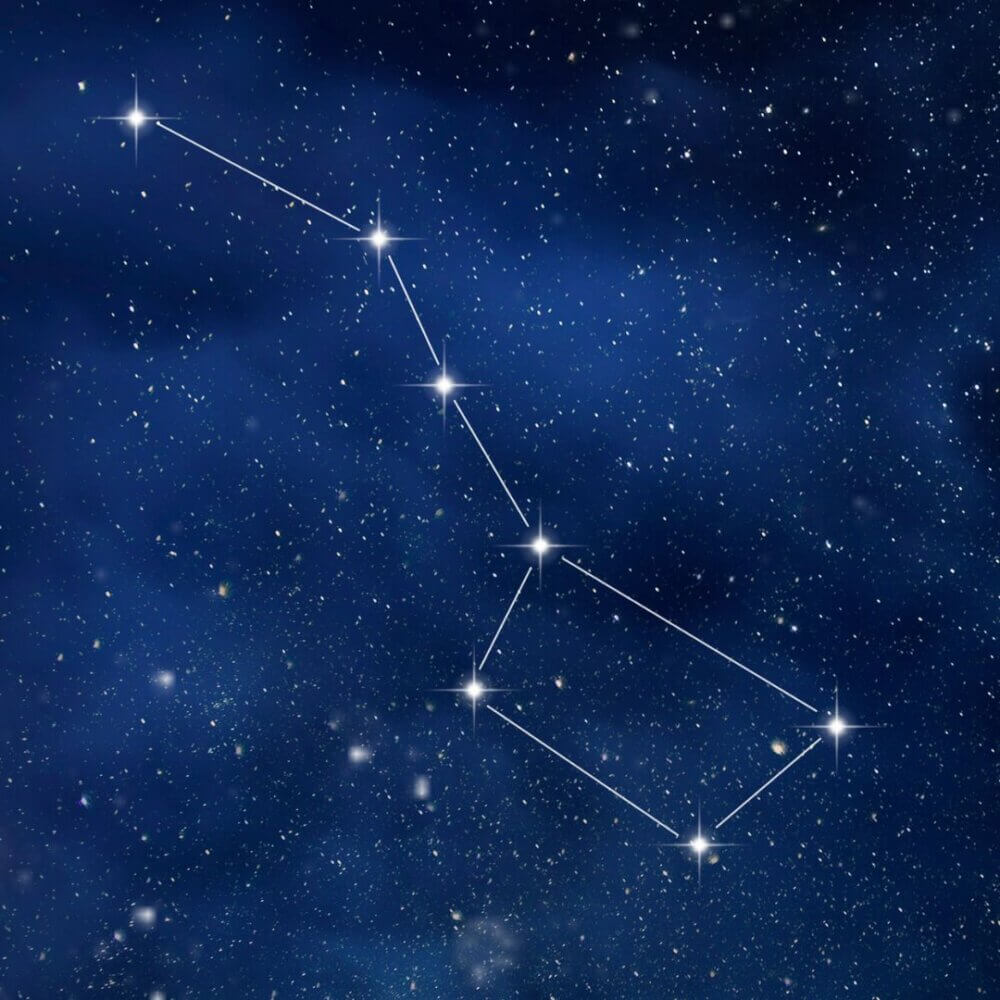
Ursa Major, home to the familiar Plough, is another useful constellation to look for. Follow the two stars at the edge of the Plough’s bowl and they can help you find Polaris, the North Star, which forms part of Ursa Minor.
In summer, look for the Summer Triangle, formed by the bright stars Vega, Deneb and Altair. Under particularly dark skies, you may also be able to see the hazy band of the Milky Way stretching across the sky.
Folklore beneath the Pembrokeshire sky
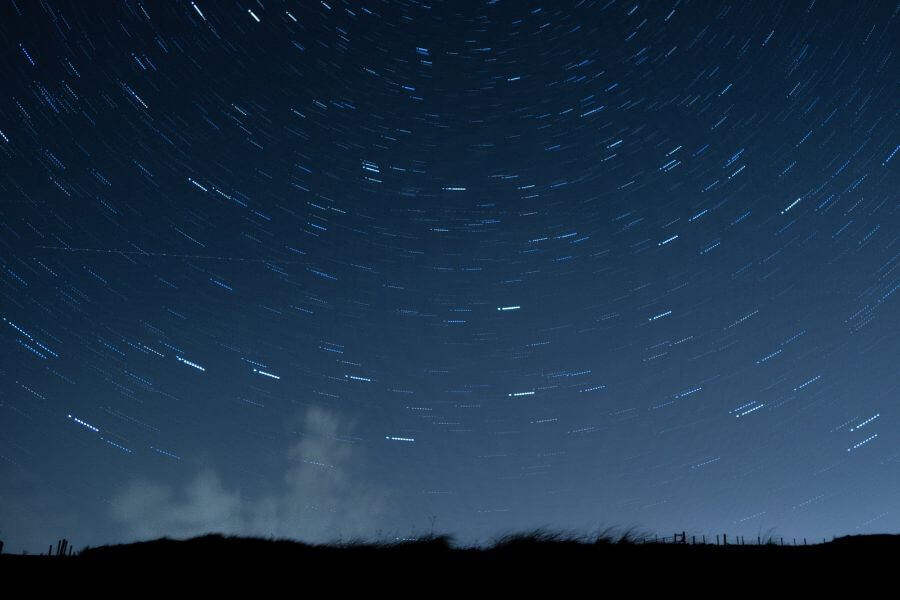
Long before modern astronomy explained the movement of planets and stars, the night sky was woven into folklore. Across Wales, stories of the Tylwyth Teg, or fair folk, connected the natural landscape with a mysterious world beyond our own. The stars, moon and changing seasons were all part of a wider folklore tradition passed down through generations.
Pembrokeshire has no shortage of stories of its own. The county’s landscape is filled with tales of giants, saints, spirits and strange happenings, from the legends surrounding St Davids to the stories attached to its ancient castles and coastline.
Looking up from somewhere as old as Roch Castle, it is easy to imagine how different the night sky must have appeared hundreds of years ago, when there was little artificial light to compete with the stars.
Meteor showers
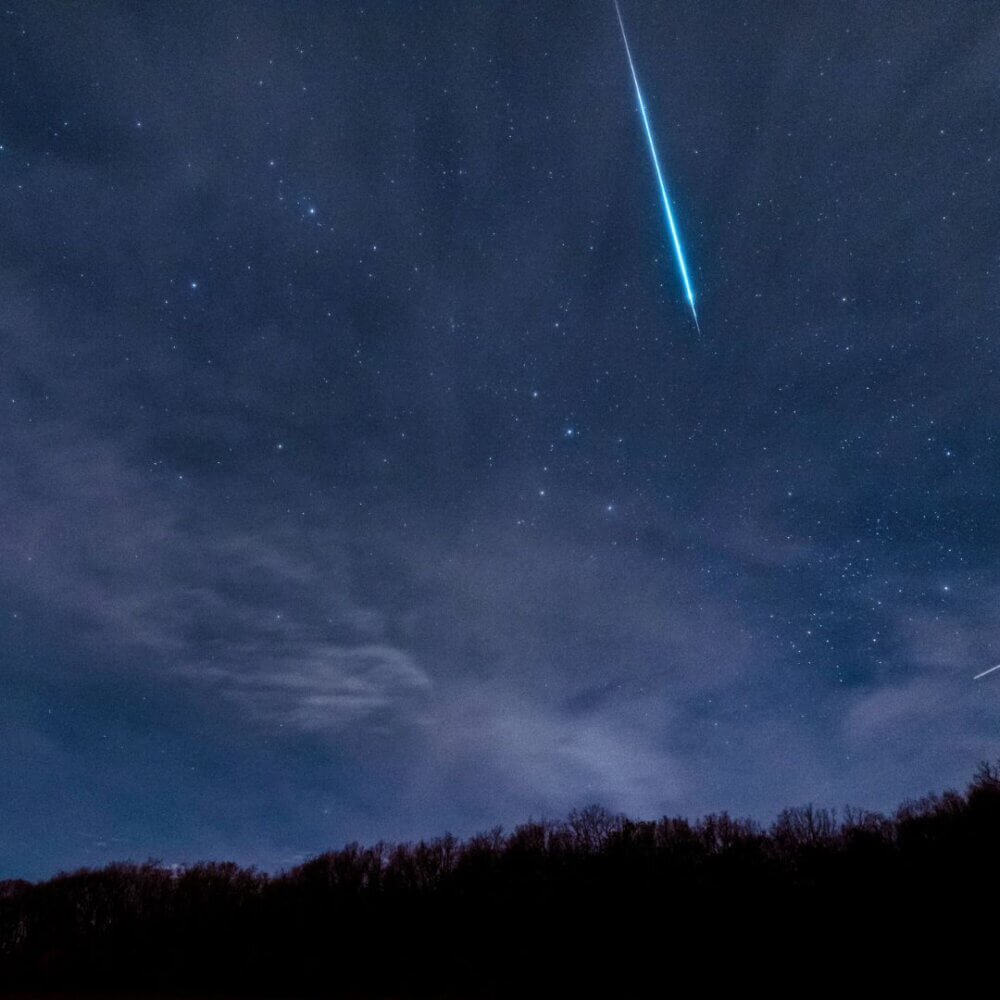
The Perseids, usually visible from July into August, are one of the most popular meteor showers to watch, with plenty of bright meteors streaking across the summer sky.
Later in the year, the Geminids bring another opportunity for meteor spotting, generally peaking around December. The Orionids, usually active in October, are another shower worth looking out for.
Meteor showers don’t require any special equipment. Find a comfortable spot with a wide view of the sky, allow your eyes to adjust to the darkness and be patient. Rather than watching one particular point, look across as much of the sky as possible.
Your Next Stargazing Escape
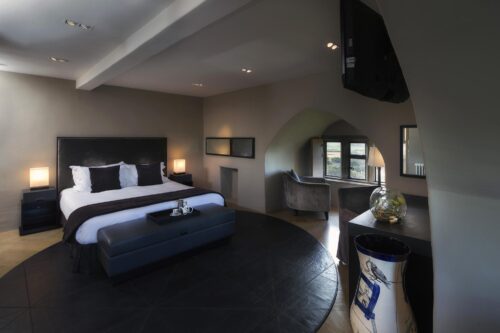
Spend the night at Roch Castle, where centuries of history meet dark Pembrokeshire skies. Settle in, look up and discover the stars from your own castle stay.